
Roselle City Directory Holdings
Roselle does not have one complete city directory shelf. The best documented printed run is a DuPage County volume that includes Roselle, supported by the Newberry Library holdings list. The library and museum add photographs, documents, newsletters, obituaries, and newspapers that can verify people found in a directory.
| Collection | Years | Where held | Access |
|---|---|---|---|
| McDonough's DuPage County Directory | 1925-26 | Illinois Digital Archives and Naperville Public Library | Free public scan and metadata |
| Newberry Roselle listing | 1925-1928 | Newberry Library | Holdings list, inquiry, or in-person research |
| Roselle Local History Digital Archive | Item-specific | Roselle Public Library, History Museum, and IDA | Free online search and browse |
| Museum newsletters | 2008-2025 | Roselle History Museum | Free PDF archive |
| Historical newspapers | Varies by title | Roselle Public Library databases | Library card and PIN generally required |
| IRAD DuPage records | Series-specific | Illinois State Archives and IRAD | Catalog, request, or archive visit |
The digitized McDonough volume has 1,188 pages and includes city sections, a rural section, advertisements, and residents arranged by city. Newberry's listing is evidence that Roselle material exists for 1925 through 1928, but it is not a promise that every image is freely online. No source found in the research establishes Roselle's first or last printed directory year beyond that documented run.
Search Roselle's Digital Archive
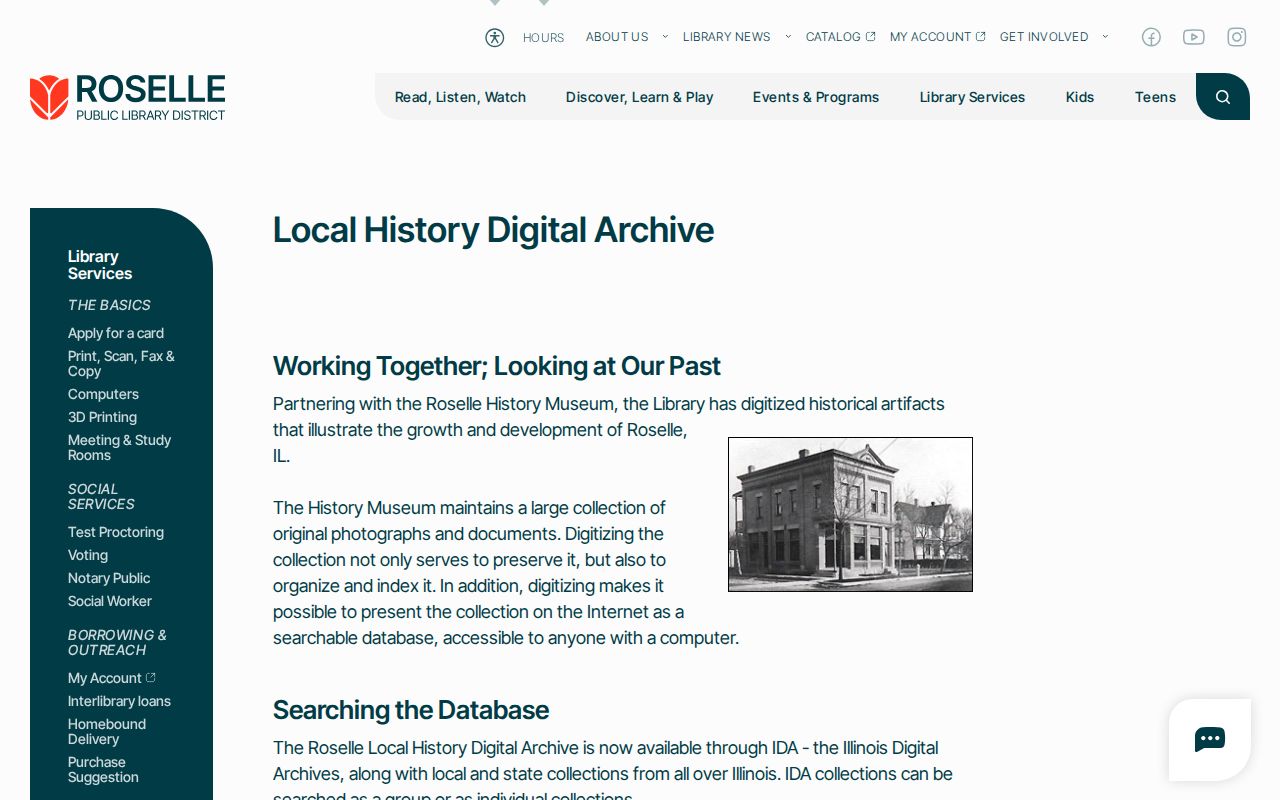
The Roselle Public Library local-history archive explains the partnership with the History Museum and Illinois Digital Archives. A researcher can limit a search to the Roselle collection, choose Browse All, or search across IDA contributors. Advanced Search targets fields such as title, subject, description, and date.
The archive normalizes uncertain dates. An undated item is represented as January 1, 1900; a decade becomes January 1 of that decade; a year becomes January 1 of that year; and a month is represented by its first day. A date-filter miss may therefore be a cataloging issue, not an absent item.
The library page pictured below describes the local digitization work and routes readers into the archive.
Scans were made at 600 ppi and 48-bit color, with archival TIFF masters retained locally. Smaller web JPEGs make browsing practical, but close detail may require staff help or the preserved master.
Open the Roselle Directory Scan
The DuPage County Directory, 1925-26 was created by McDonough & Co., published in 1925, and contributed by Naperville Public Library. Its description expressly includes Roselle. It is the strongest online city directory source because it is an actual period volume, not a later name compilation.
The capture did not expose stable OCR or a machine-readable Roselle entry. Browse to the printed Roselle heading and transcribe each line from the image. Record the page number, edition, name, spelling, address, marks, and abbreviations. Do not invent missing fields or treat collection metadata as the text of an entry.
The Roselle collection in Illinois Digital Archives provides a second path into local photographs and documents.
Read a Roselle Directory Line
A city directory line is compact and edition-specific. Photograph or save the abbreviation key before interpreting it. Since no exact Roselle line was machine-readable during research, the fields below are an inspection checklist, not a fabricated sample.
| Indexed name | Copy surname, given name, initials, and spelling exactly. |
|---|---|
| Parenthetical name | Record a spouse or relation only when the printed line states it. |
| Occupation | Transcribe the work or business phrase and its abbreviation. |
| Street address | Capture the number and street as printed in that edition. |
| Status or tenure mark | Use the edition key before interpreting owner, renter, widow, or boarder marks. |
| Citation | Save the page, publisher, and year with the transcription. |
- Criss-cross directory
- A directory arranged by street and house number, allowing an address-to-name search.
- Householder index
- A list centered on the named person responsible for a household, not a complete occupant roster.
- Abbreviation key
- The publisher's legend for shortened occupations, places, relationships, and status marks.
A line proves only what the publisher printed for that edition. It does not prove that a person stayed at the address all year or that every relationship remained current.
Cross-Check Roselle Names Locally
The Roselle History Museum genealogy project provides A-to-Z surname downloads, virtual-cemetery work, and obituary dates compiled from periodicals, obituaries, memorial cards, and other sources. The museum warns that errors are possible and accepts corrections by email or mail. That openness makes the index useful as a lead rather than a final fact.
The museum genealogy page pictured below is the local route for obituary and cemetery clues.
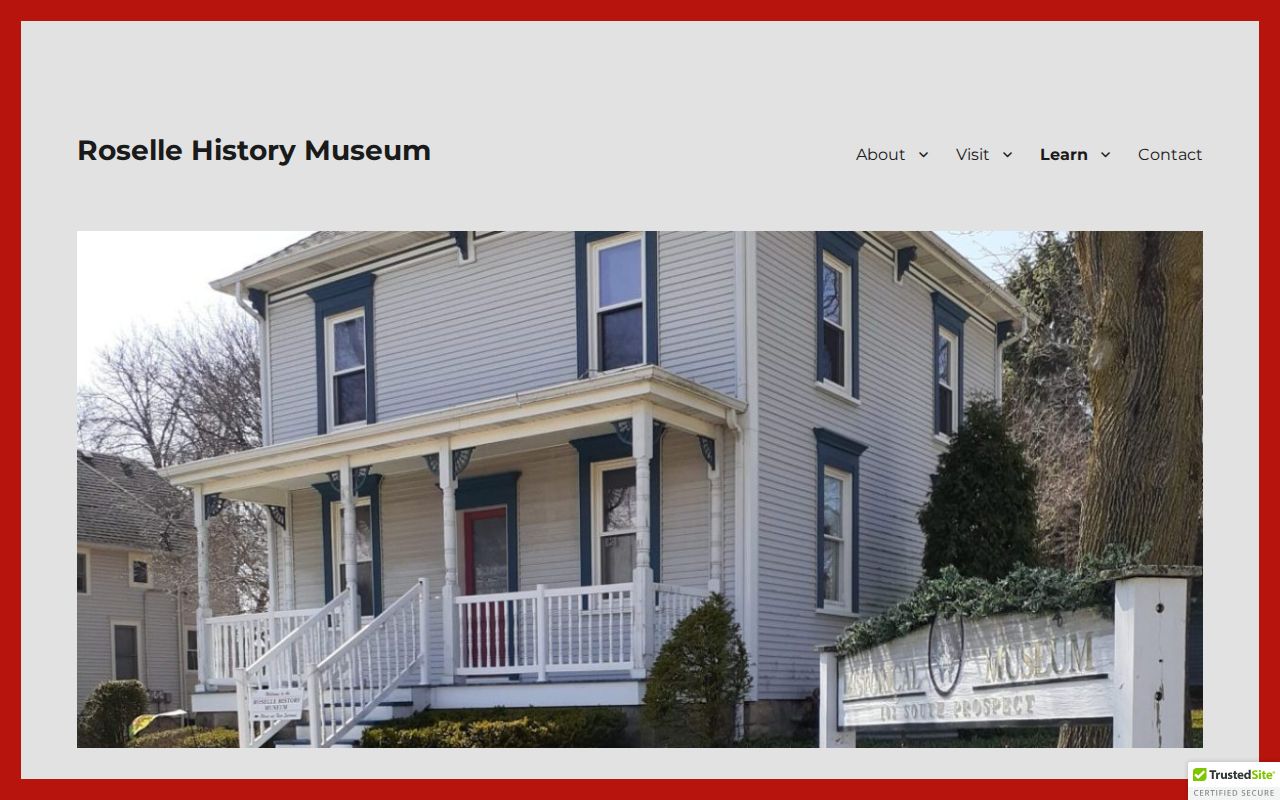
Corrections or new obituary material can be sent with “Attn Obits” to the museum, including by mail. This human review channel is valuable when a surname was misspelled, split, abbreviated, or indexed under an unexpected form.
Roselle Archives Divide the Evidence
The library and museum keep different kinds of evidence. Library databases cover historical newspapers, including long runs for major Chicago papers and later Daily Herald editions. The museum preserves photographs, newsletters, buildings, obituary work, and local people and place history. Newberry supplies directory and census context, while IRAD catalogs older county series.
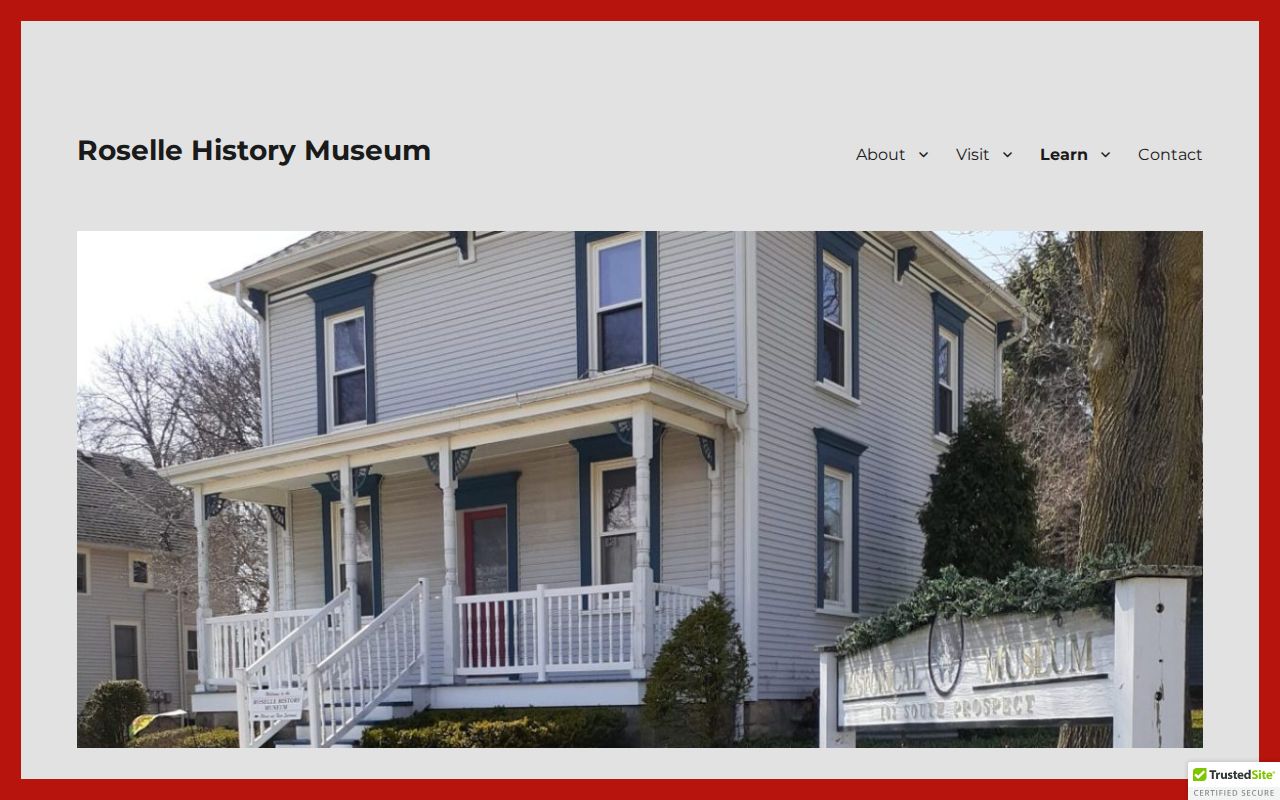
The Roselle historic photograph collection adds images and captions to names and addresses found in a directory.
Online access includes the directory scan, IDA, museum PDFs, photo pages, archive search, holdings guides, and IRAD catalog. Offline routes include library and museum staff, Newberry, State Archives and IRAD, and county research rooms. Call the library at 630-529-1641 or the museum at 630-351-5300 with a name, date, or collection instead of an open-ended search.
Roselle Directory Words Tell Stories
Railroad and dairy terms can unlock a Roselle city directory search. The local history identifies early settlers, the rail route, a packing house, the Illinois Linen Company, and the station. Museum material says the station name may preserve a spelling error from “Rosell.” Search both forms when the context is early Roselle.
A listed station, dairy, or railroad role can be paired with the museum chronology, newspapers, deeds, and obituaries. The museum's milk-train material covers a station-agent period from 1921 through 1951, which overlaps the known directory run. That local vocabulary is more useful than guessing at a modern equivalent.
Roselle's Richter House adds a human research thread. The house moved in June 1996 to the rear of the museum during construction of the new Village Hall, and Malinda Richter lived to age 105 in 1999. A directory name or address tied to that property still needs a printed citation, but museum history can explain the building's later path.
Roselle Records Across the Years
The directory run sits within a longer county and village record history. Each milestone points toward a different custodian, which helps when the printed shelf has a gap.
| 1839 | DuPage County was organized; older county series now appear through county offices and IRAD. |
|---|---|
| 1922 | Roselle incorporated on October 7. |
| 1925-26 | McDonough's DuPage County Directory included Roselle. |
| 1925-1928 | Newberry lists the Roselle directory run under DuPage County. |
| 1961 | DuPage's online recorder name index and images begin March 16. |
| 2008-2025 | The museum newsletter archive supplies dated local stories and names. |
No verified courthouse fire explains the gaps, and no source established a first or last Roselle printed directory year beyond the known listing. Missing years should lead to newspapers, census schedules, deeds, IRAD, church material, and museum files, not folklore.
Trace Family Through Roselle Directories
A careful family trail moves from the printed directory image to records created for a different purpose. The 1925-26 directory falls between the 1920 and 1930 federal censuses, so it can narrow a move or place a name between census dates. It should never replace those original records.
- Find the Roselle city heading, then inspect surname variants and initials on the page images.
- Transcribe the whole line and citation. Check the publisher's abbreviation key.
- Compare the address and household with the 1920 and 1930 census context.
- Test the address in deeds, maps, newspapers, photographs, and later city directories.
- Use museum obituaries, cemetery files, marriage or death indexes to explain a disappearance.
A missing name may mean a move, death, omission, changed spelling, changed boundary, or a publication gap. Check the next known source before drawing a conclusion. For a modern address-keyed investigation, use the Roselle street directory rather than forcing historical collections to answer a current question.
Note: Cite the page image and edition with every transcription, since an index entry alone may hide spelling, context, and publisher marks.