
Roselle Previous Resident Sources
Start with the present parcel, then choose sources by era. The Roselle Community Portal identifies whether an address belongs on the DuPage or Cook branch. Assessment records name owners, not every occupant. A deed proves a recorded transfer, while a directory or census may place a household at the street address. These sources answer different questions, and their dates should be recorded separately.
| Source | Time span | Custodian | Best evidence |
|---|---|---|---|
| DuPage recorder index | Name from 1961; PIN from 1985; address from 1995 | DuPage Recorder | Parties, document, and transfer date |
| Cook recording search | Varies by record | Cook County Clerk | Cook-side recorded documents |
| County directory | 1925-26 scan; Roselle run listed 1925-1928 | IDA and Newberry | Printed names and street details |
| Census records | Public releases under the 72-year rule | NARA and libraries | Household at an enumeration date |
| Local archive | Item-specific | Roselle Library and Museum | Photos, obituaries, newsletters, and context |
Keep a log with the source, event date, record date, spelling, and address as printed. That stops a later obituary or directory line from being mistaken for proof of ownership. Previous residents may include owners, relatives, or other occupants, but the source must say which role is supported.
Roselle Addresses Split by County
A Roselle mailing address does not settle the county. The village crosses DuPage and Cook, and the recorder, assessor, clerk, and archive path changes at that line. Search the address in the Community Portal or parcel viewer before ordering anything. The result can also show township, precinct, library, park, and school districts, which may point to further records.
DuPage researchers use the Recorder of Deeds and parcel tools. Cook-side searches use the Cook County Assessor, CookViewer, and Clerk Recording System. If an address is absent from one county portal, recheck the boundary before concluding no record exists. District facts are orientation clues, not proof that a named person lived there.
Note: A postal city, village boundary, parcel county, and service district can describe the same Roselle address in different ways.
Trace Roselle Deeds Backward
The present assessment record supplies a PIN, or property identification number, and a legal description. Use both to keep the land fixed while names and street labels change. The DuPage Recorder Online Search covers indexed documents and images from March 16, 1961. Search routes have different cutoffs: name from 1961, PIN from 1985, and address from 1995. Older work belongs at the research desk and in historical books.
- Find the current parcel and copy its PIN and legal description.
- Open sale history and record the deed date, document number, seller, and buyer.
- Search that seller as an earlier buyer, then compare the legal description.
- Repeat one transfer at a time, using the recorder counter when online coverage ends.
The portal showed a system-down notice during research. Retry later or call the DuPage recorder research desk at 630-407-5401. An unavailable page does not mean the deed is missing. Cook-side Roselle property follows the Cook Clerk Recording Search and its office channels.
- Grantor
- The person or entity transferring an interest.
- Grantee
- The person or entity receiving it.
- Chain of title
- The linked sequence of recorded transfers for the same land.
- Legal description
- The lot, block, subdivision, or land description that is more stable than a street address.
Roselle House History Help
The Roselle History Museum Historic Property Recognition Program is a local route for a pre-1955 or architecturally significant property. The museum can suggest a research direction, while the county deed remains the source for a transfer. This human contact helps when an address, building name, or family story is not indexed online.
Ask about the property, date range, photographs, and former names. Give staff a narrow request. The Museum also keeps historic photographs and newsletters that document Roselle people and places. This service supports house history without turning a historical search into a claim about current occupancy.
The historic property page is shown below. Its contact links a house to local records, rather than proving who occupied it.
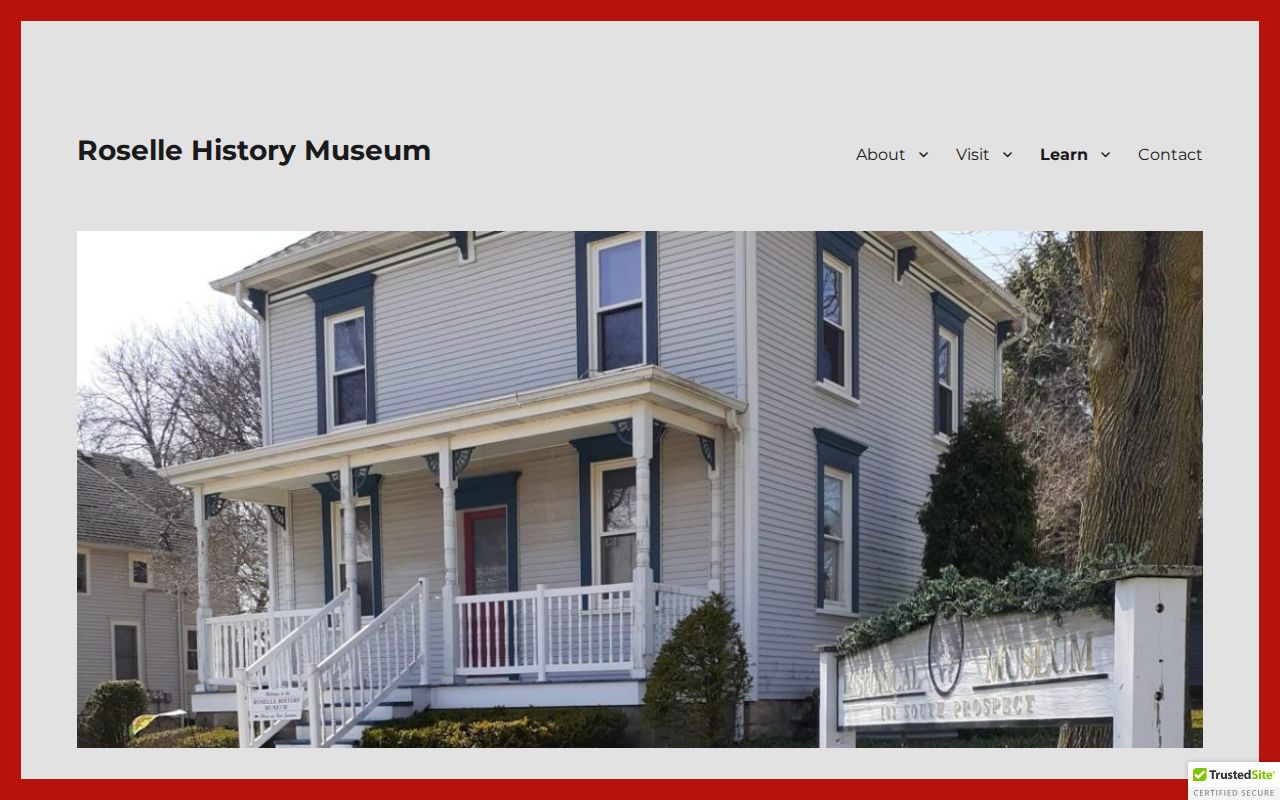
Use the contact after the parcel and deed trail are assembled, so staff can work from a precise address and time span.
Pair Roselle Directories and Census
The digitized McDonough DuPage County Directory for 1925-26 includes Roselle and contains 1,188 pages. Newberry’s holdings list separately documents a Roselle run from 1925 through 1928. Those facts establish useful sources, but no exact Roselle entry was readable in the research capture. Open the scan and transcribe only what the printed line shows.
A practical sequence connects sparse snapshots without treating them as continuous proof:
- Locate the address or surname and note the page, year, spelling, and printed role.
- Check the nearest public census year for the street and household.
- Compare names with deeds, newspapers, cemetery records, and vital indexes.
- Mark every gap. Never assume a person remained until the next record date.
Detailed holdings belong on the Roselle Directory Book page. Here, each directory year is one checkpoint in the trail of past residents.
Roselle Genealogy Record Limits
Vital records can confirm an endpoint, but Illinois does not open every certificate. The Illinois genealogy records service explains older-record access and directs pre-1916 searches toward county sources and IRAD. Thresholds differ by record and custodian, so verify the current rule before ordering.
The state genealogy page appears below because it is the official route for historical birth, death, and marriage research. Its rules distinguish a searchable historical record from a restricted certified copy.
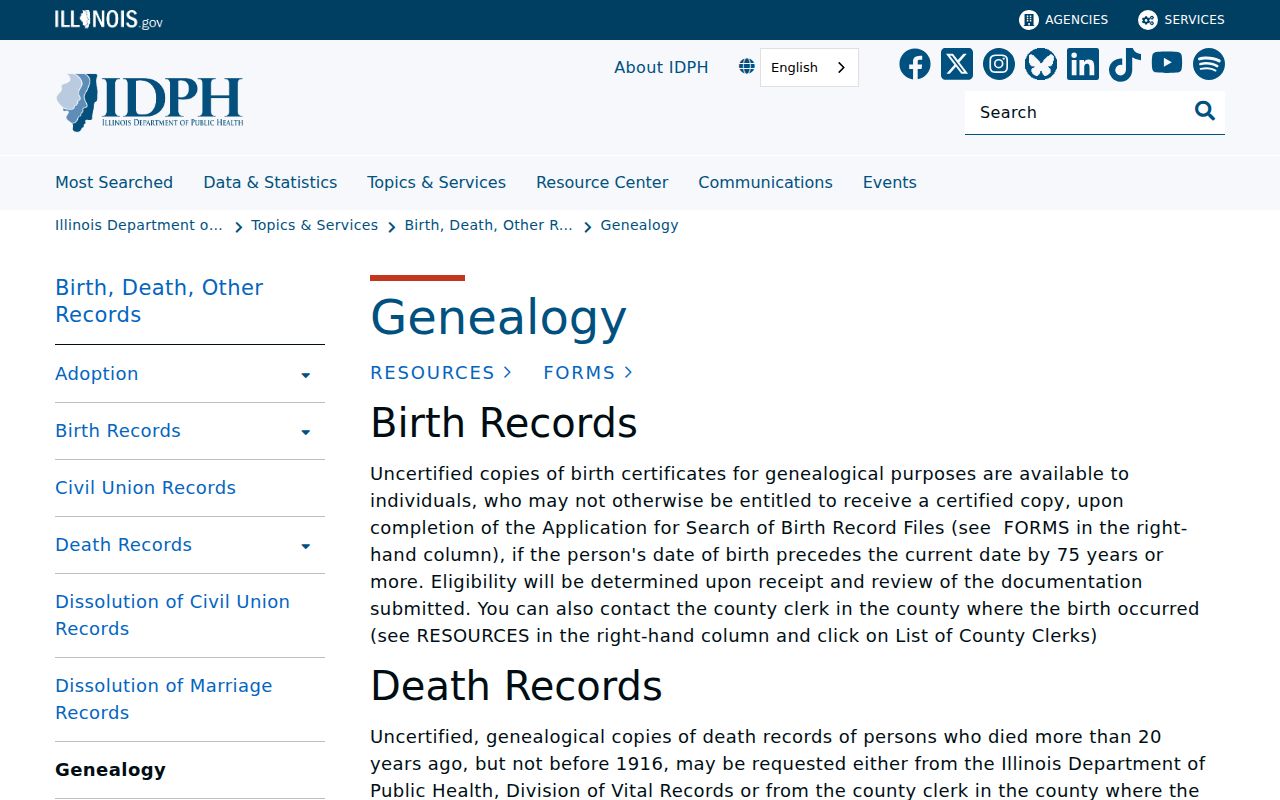
IRAD’s DuPage catalog includes birth, death, marriage, naturalization, probate, permit, and other series. Not all are indexed by name online, so request the exact county, series, year, and volume.
Roselle Past Residents in Obituaries
The Roselle History Museum genealogy project has surname downloads, obituary dates, and a virtual-cemetery project. It accepts corrections by email or mail, a useful path when a compiled date or spelling is wrong. An obituary can identify relatives, a former address, and cemetery context, but compare those statements with the original notice.
Probate may extend the trail after a death. The DuPage Genealogical Society’s probate index covers 1839-1972 and includes box, page, file, names, administrator or executor, dates, and proceeding type. Member access applies. Ask the court or archive for the underlying file when the index alone does not explain a transfer.
Note: Treat compiled obituary and cemetery data as leads, and send a correction when an original notice supports a different fact.
Keep Roselle Addresses Continuous
No verified Roselle-wide street-renumbering list was found. The Village honorary-street policy says an honorary designation does not change the official street name, address, residence, or business. An honorary sign is a local quirk, not a reason to rewrite an address in the deed chain.
Older plats, the 1874 DuPage atlas, legal descriptions, directories, and historic photos can bridge a mismatch. The Library of Congress Sanborn collection is a search route, but no Roselle sheet was confirmed. State the gap. A railroad-era place name or historical “Rosell” spelling may also improve an archive search.
Lawful house research. Trace previous residents for genealogy, property history, estate work, or reconnection. Never publish protected details or use records to watch, harass, or harm anyone.
When Roselle Records Stay Offline
Use every access channel. Older DuPage deeds require the Recorder’s research desk or office holdings at 421 N County Farm Road in Wheaton. Library staff, the History Museum, Newberry, IRAD, and genealogical repositories handle historical material. Phone or write with a focused date range, record series, and parcel identifier.
At a county counter, ask whether the index is arranged by party, parcel, book and page, or instrument number. For an archive, request the exact series and year before asking for copies. Roselle Library staff can help with licensed newspaper databases, including historical Chicago titles and Daily Herald editions, while the museum can help interpret local names and photo captions. These channels matter when handwriting, OCR, or incomplete web coverage hides an otherwise surviving record.
Village permits can add building context, but no public historic permit index was confirmed. Ask the permit counter, or submit a narrow request through the Roselle NextRequest portal. Describe the address, approximate date, permit or inspection type, and desired file. Illinois FOIA applies to qualifying public-agency records, but it does not turn a private museum collection into a public record or override a confidential record rule. A permit application proves an application trail, not the identity of every previous resident.
The strongest conclusion may still be a dated range. If one owner appears on a deed and a different household appears in a later directory, report both facts and leave the interval open. That is more accurate than assigning an unrecorded move date. It also gives the next researcher a clear place to check newspapers, probate files, tax books, or the next available census.